Rehab After Joint Replacement Surgery
Hip & Knee Replacement Rehab with the AlterG® Anti-Gravity Treadmill
Add anti-gravity treadmill sessions to the rehab you're already doing. Walk and exercise at a reduced, adjustable percentage of your body weight while you rebuild strength and confidence in your new joint.
Sessions can start from one week after surgery, once your assessment confirms it's suitable. No referral needed. In Stourport-on-Severn, within easy reach of Kidderminster, Worcester and Birmingham.
Add It To Your Recovery
What the AlterG adds to your rehab
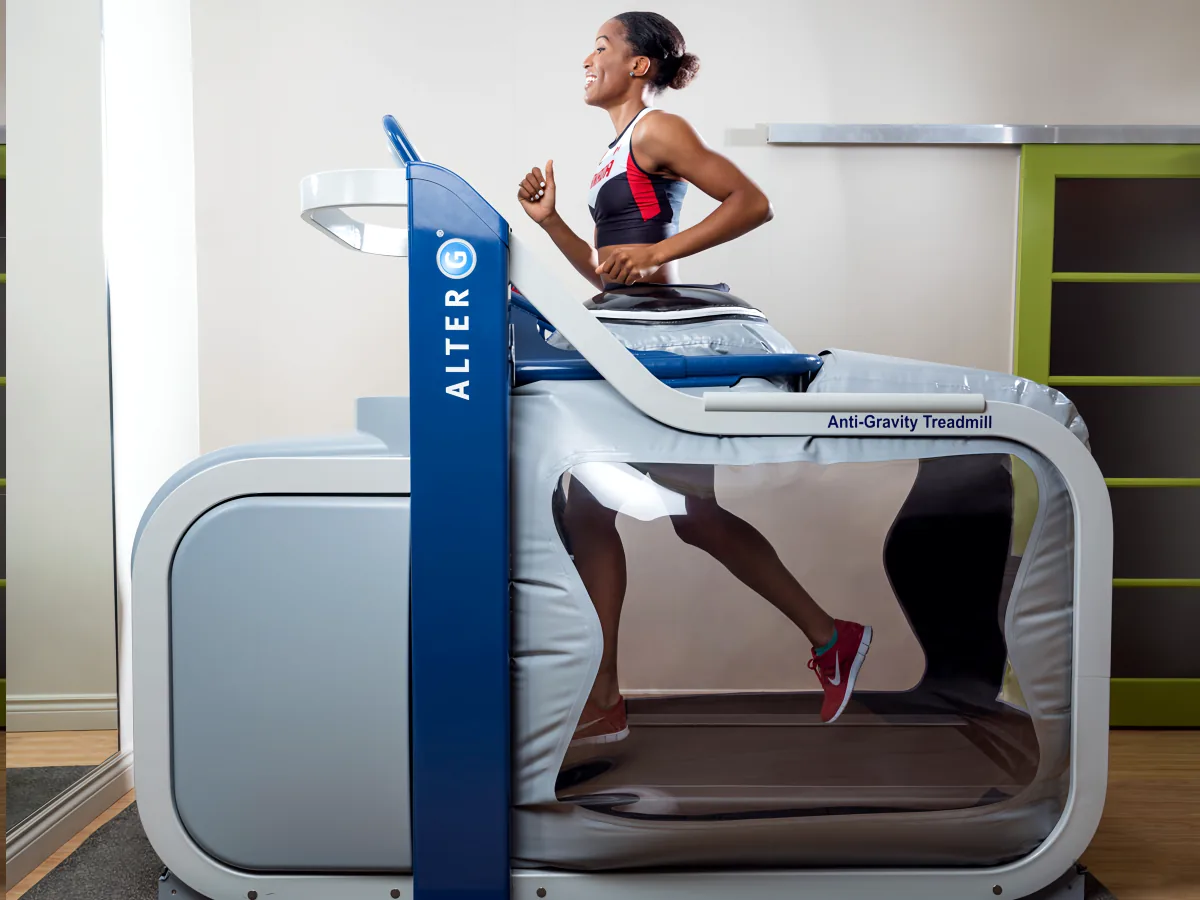
Keep doing the rehab you've been given, and add sessions on the AlterG alongside it. By taking some of your body weight off your legs, it lets you add walking practice and exercises at a level Lewis adjusts to how you're getting on.
- check_circleStart from one week after surgery — once your assessment confirms it's suitable
- check_circlePractise walking with less weight through your legs — at a reduced, adjustable percentage of your body weight
- check_circleDo exercises at a reduced body weight — including ones you may not yet manage at full weight
- check_circleBuild up gradually — the support adjusts in 1% steps, and Lewis increases the load as you progress
- check_circleTrack your progress — Lewis records a baseline at your assessment and tracks your progress throughout
- check_circleFit it around your current rehab — tell Lewis about the plan you've been given and he'll build your AlterG sessions around it
How the AlterG works
You step into a pressurised air chamber that gently lifts you, taking a set percentage of your body weight off your legs.
Lewis sets and adjusts the level based on how you tolerate it, working you gradually back up towards your full body weight. No referral needed to get started.
More about the AlterG arrow_forwardWho It's For
Before and after your operation
Recently had surgery
From one week after a hip or knee replacement, alongside the rehab you've been given.
Waiting for surgery
Stay active and build strength and confidence before your operation.
Finding walking hard work
Practise walking at a reduced body weight while your stride, strength and confidence build.
Getting back to what you enjoy
Working towards longer walks, the golf course or the gym.
What to Expect
How your programme works
You can start from one week after surgery, as long as your blood pressure is normal and there are no signs of a blood clot (DVT). These are checked at your assessment.
Initial assessment
30 minutes checking your range of motion, strength and walking, then 20 minutes on the AlterG so Lewis can see what you can and can't do yet, and record a baseline.
Your starting point
At one week after surgery, patients typically start at around 50% of their body weight.
Building back up
Each 30-minute session combines treadmill walking with exercises at reduced body weight. Lewis increases the load based on how you tolerate it and how you're progressing.
A typical programme
After surgery, a programme typically runs for 12–16 weeks, with one or two sessions a week and a review halfway through.
Rehab after a knee replacement
Most people take several months to fully recover from a knee replacement, and it's normal for some swelling to hang around for a while. Common goals along the way include:
- check_circleGetting your knee fully straight
- check_circleBending it enough for stairs, chairs and getting in and out of the car
- check_circleWalking without crutches or a stick — many people try this from around 6 weeks, if they feel ready
- check_circleRebuilding the strength in your thigh muscles
Where the AlterG fits
Walking at a reduced body weight lets you practise a smooth, even stride and do your strengthening exercises with less load through the new knee — then build back up as you progress.
Rehab after a hip replacement
Recovering from a hip replacement also takes several months, with strength and confidence in the operated leg building gradually. Common goals along the way include:
- check_circleWalking without a limp before cutting down on crutches or sticks
- check_circleRebuilding strength around the hip, including the muscles that keep you steady when you walk
- check_circleGetting in and out of chairs, bed and the car with confidence
- check_circleWalking further, at your own pace
Where the AlterG fits
Taking some of your body weight off lets you practise walking with a more even stride and do your exercises at a reduced load, then gradually build back up to full body weight.
Advice on which movements to avoid varies between surgeons and surgical approaches, so always follow the instructions your surgical team gave you. Lewis works within them.
Everyone recovers at a different rate. These are typical goals, not promises — your surgeon's advice always comes first.
Pricing
What it costs
Start with an assessment. After surgery, Lewis will usually point you towards the Rebuild package.
AlterG initial assessment
30 minutes of assessment covering your range of motion, strength and walking, followed by 20 minutes on the AlterG to set your baseline.
Rebuild package
Built to support your recovery after surgery. Sessions are 30 minutes, supervised by Lewis.
Every package includes
- check_circleA review halfway through your package
- check_circleProfessionally planned rehabilitation protocols
- check_circleProgress tracking throughout
- check_circleAlways under supervision
Lewis will recommend how many sessions you need at your assessment. Waiting for surgery? Book the assessment and he'll suggest a plan. We're a private clinic and don't take health insurance.
Your Rehab, With Lewis
Experience you can rely on
Lewis has 11 years' experience working with joint replacement patients in private practice, and is a member of the Society of Sports Therapists. He supervises every AlterG session himself.
“What an amazing experience!! … I have been waddling less!! … Since going on the treadmill I have a firm belief that I can see myself getting outdoors walking a good distance again. The treadmill gave me confidence to do exercises that no way I could have done without it.”
Common Questions
Frequently asked
How soon after a hip or knee replacement can I use the AlterG?
Can I use the AlterG alongside my NHS physiotherapy?
Do I need a referral or anything from my surgeon?
How long is a typical programme?
What happens in a session?
How long does it take to recover from a hip or knee replacement?
When can I drive after a hip or knee replacement?
What should I do if something doesn't feel right after my operation?
Rehab isn't the right place for these symptoms, so don't wait for your next session.
Call 999 or go to A&E if you have pain and swelling in your leg and you're having difficulty breathing or chest pains. This could be a blood clot in the lungs. Don't drive yourself — ask someone to take you or call an ambulance.
Contact your surgical team, get an urgent GP appointment or call NHS 111 if you have:
- throbbing or cramping pain in your hip or leg
- a high temperature, or you feel hot, cold or shivery
- oozing or pus from your wound
- redness, tenderness, swelling or pain that isn't getting better or is getting worse
If anything like this comes up during your programme, Lewis will pause your sessions and point you to the right medical help.
Can I use the AlterG before my operation?
Can I use my private health insurance?
Getting here
Office 5, Civic Centre
New St, Stourport-on-Severn
Worcestershire, DY13 8UJ
Parking is very close by, and there's a lift if you need it. Easy to reach from Kidderminster, Bewdley, Worcester and Bromsgrove, and around 45 minutes from Birmingham.
Ready to add the AlterG to your recovery?
Book your assessment online. No referral needed.
Prefer to talk it through first? Call 01299 569 011.